Active Isolated Stretching technique

Male pelvic pain, prostatitis, IC
mbaker
Experienced
Experienced
Posts: 148
Joined: Fri Mar 23, 2007 3:46 pm
Location: Washington DC area

Active Isolated Stretching technique

Post by mbaker »

So one of the elements of our Protocol is stretching specifically the SP stretches in the HITP book as well as many others that people have found that help. One thing I've struggled with is the actual stretching process and not overdoing it in the effort to get better. Sometimes I overdo a stretch, the muscles burn and I have to back off for a day or 2. It can get frustrating. And I've read that some of you have accidentally torn or pulled muscles doing this also.

I've been seeing a sports medicine PT for an unrelated matter and he showed me how to do stretches using a technique called Active Isolated Stretching. This technique was invented/discovered by Jim Wharton who along with his son, trains many of the elite athletes of the world. His theory is that stretching any muscle for 20-30 or more seconds is just wrong. That a muscle will automatically begin to reflexively contract after about 3 seconds when stretched. Also, the key to stretching any muscle is to contract the opposite muscle. This has the effect of loosening the muscle you want to stretch. Instead of stretching a muscle for 20-30 seconds, you stretch for 2s, pause, stretch again for 2s, and continue for 10 reps. At each rep, you can often feel the muscle elongate just a bit as it gradually stretches. There's no overt pulling or pushing on the muscle to get it to stretch (which was the way I was taught in high school a long time ago).

Here's an example for the hamstring:
1) You lie on your back with the left knee bent. The right leg is moved vertical or near vertical.
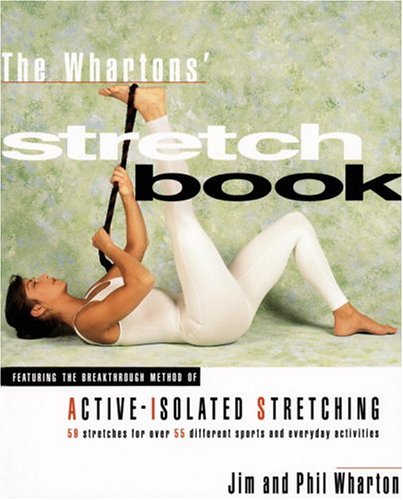
2) You place a rope or band around the foot and hold onto it. The cover of the Wharton's book shows what I'm talking about.
3) You do NOT pull on the foot. The arms and bands are just there to stabilize the leg.
4) You then contract the Quad muscle pulling the leg towards your head as far as you can go.
5) You very lightly, and I mean very lightly make sure the band is snug. Do not pull on the leg.
6) You hold this for 2s and then relax. Repeat 10 times.
7) Switch to the other leg.

Anyway, I bought the Wharton's book on Amazon that goes into about 60 different stretches for the body. Fortunately, they overlap with the SP stretches so you can find the alternative Wharton version. I've been doing this now for a bit and so far so good.

Here is their book in case anyone is interested:
Image


It will be interesting to see if this technique enables us to better stretch these muscles and get more impact towards curing CPPS.

MB
Age: 45; Onset: Jan 2007; Initial | Symptoms: perineal, pubic, penile, right testicle pain, pain while sitting; Current | Symptoms: 95% better; very seldom do I have pain now; caffeine was the culprit; Helps: No caffeine (even decaf), Red tea, Getting exercise, Pure Encapsulations Nutrient 950 multi-vitamin; Hurts: Caffeine, sometimes when my l5s1 back issue acts up.
BigStoneMax
New Member
New Member
Posts: 13
Joined: Wed Oct 18, 2006 12:22 pm
Location: Exeter, RI

Active Isolated Stretching

Post by BigStoneMax »

Hi,

I have been doing active isolated stretching with a therapist and on my own for a few weeks, but I've not shown any improvement.

Please keep us updated on how it goes with you.
Max
jimbo108
New Member
New Member
Posts: 5
Joined: Wed Jul 11, 2007 11:14 pm

My experience with Active Isolated Stretchin

Post by jimbo108 »

I've been doing active isolated stretching for about 9 months and have had very good results with it. I originally learned to do the stretching while doing athletic training. I've recently had a flare up of my pelvic pain and I've substituted active isolated stretches for some of the stretches recommended in HITP with good results.

I wouldn't suggest that people stop all passive stretching, but active isolated stretching has been shown to be very effective and is used by many of the best trainers.

Another great source of active isolated stretches is Mark Verstegen's books and web site: http://www.coreperformance.com
The web site has nice videos that illustrate the stretches.
Age: | Onset Age: | Symptoms: | Helped By: | Worsened By:
adrianclark
Beginner
Beginner
Posts: 26
Joined: Tue Jun 19, 2007 8:30 pm
Location: London

Post by adrianclark »

Sounds interesting... I've definitely had the best results from stretches. I've just ordered a copy from good old Amazon Marketplace.
Age: 38; Onset: 38; | Symptoms: the famous "golf ball" sensation, irrational feel of needing to urinate, feeling of "fatigue" in pelvic floor, general lack of energy... all symptoms fairly mild and isolated; | Helped By: relaxation, stretching exercises, (possibly) alcohol, hot baths, sleep; | Worsened By: over-exertion (suddenly running without warming up), possibly excessive sedentary work
mbaker
Experienced
Experienced
Posts: 148
Joined: Fri Mar 23, 2007 3:46 pm
Location: Washington DC area

Post by mbaker »

A brief update: I made an error :oops: when I stated in my original post that the Wharton's discovered AIS. Actually, they have helped popularize it, but Aaron Mattes actually discovered it. He has a series of books on both Active Isolated Stretching and Active Isolated Strengthening.
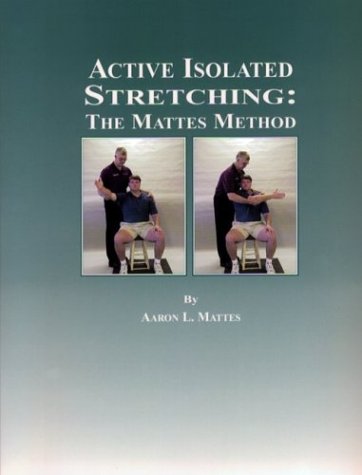
Here is a link to his stretching book which is excellent I might add.

Image

Hope this helps
--MB
Age: 45; Onset: Jan 2007; Initial | Symptoms: perineal, pubic, penile, right testicle pain, pain while sitting; Current | Symptoms: 95% better; very seldom do I have pain now; caffeine was the culprit; Helps: No caffeine (even decaf), Red tea, Getting exercise, Pure Encapsulations Nutrient 950 multi-vitamin; Hurts: Caffeine, sometimes when my l5s1 back issue acts up.