|
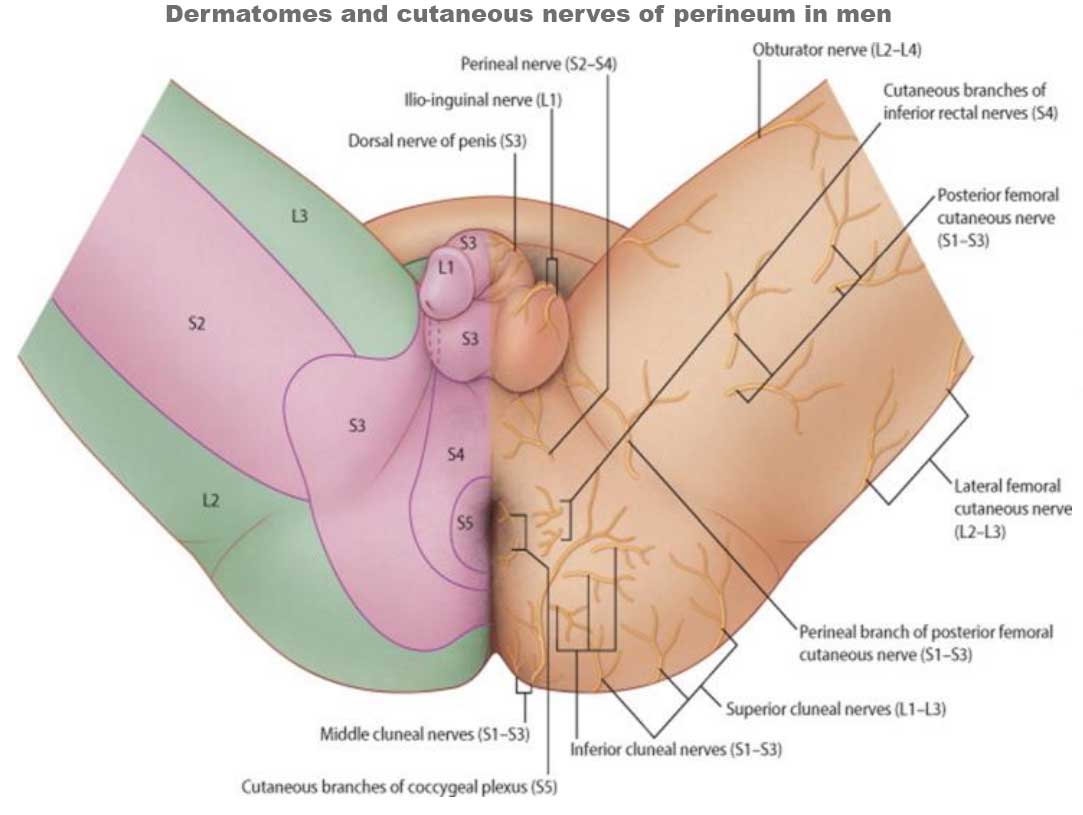
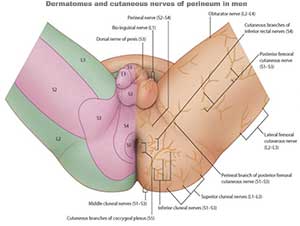
| Nerve dermatomes in male pelvic anatomy. Click diagram to see enlarged view. Source: Facing Pelvic Pain |
|
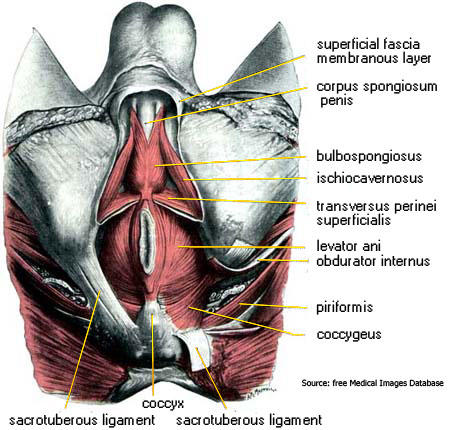
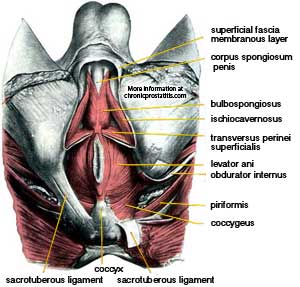
| General male pelvic anatomy. Click diagram to see enlarged view. Image from free medical images database. |
|
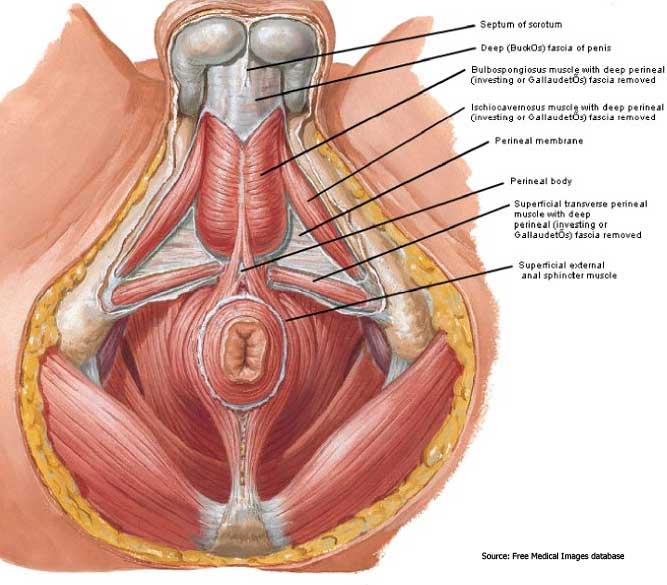
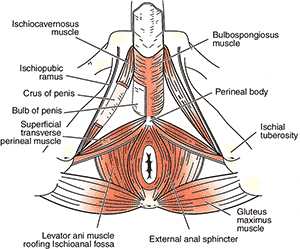
| Another general view. Image from free medical images database. |
|
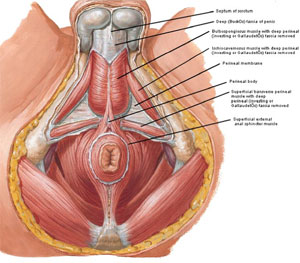
| Another general view. Image from free medical images database. |
|
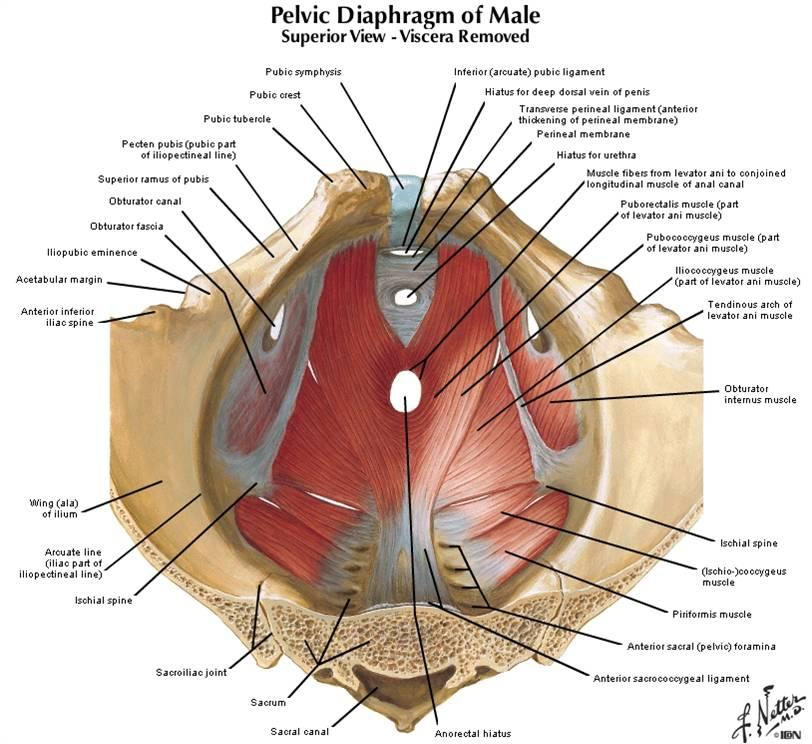
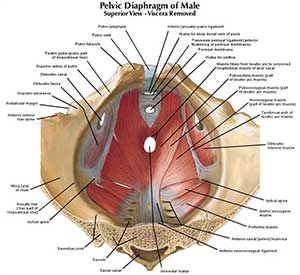
| Another general view of the male pelvic diaphragm. |
|
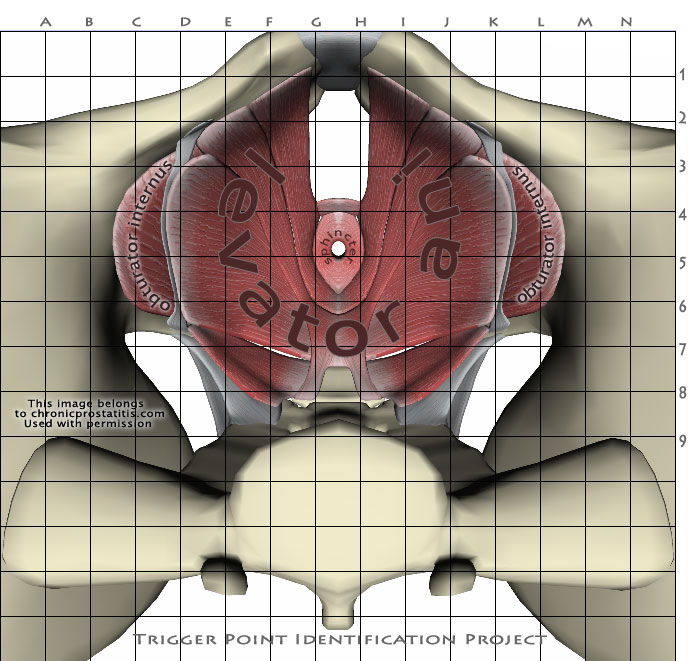
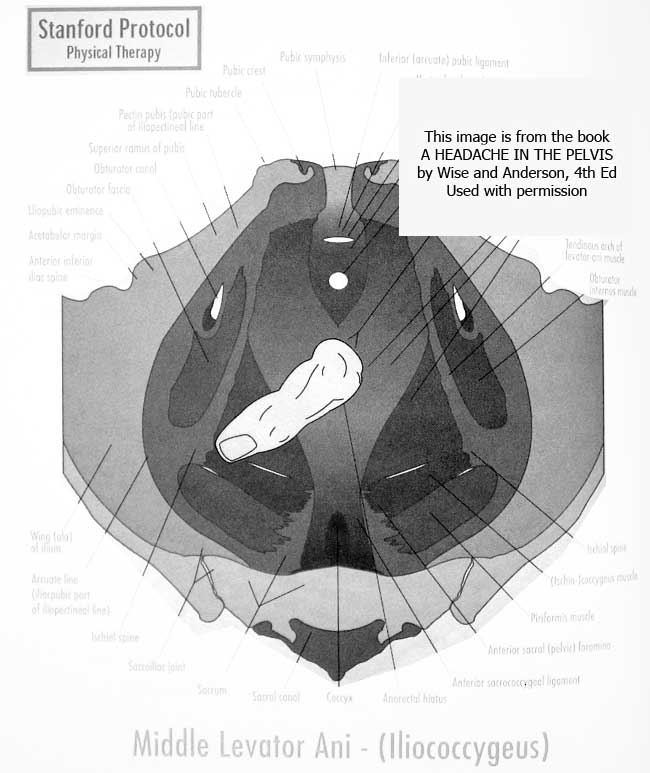
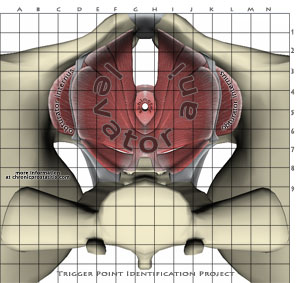
| Here is a diagram of an overhead view looking down into the pelvic floor to print for your Physical Therapist. Ask him/her to note the locations of your TrPs. |
|
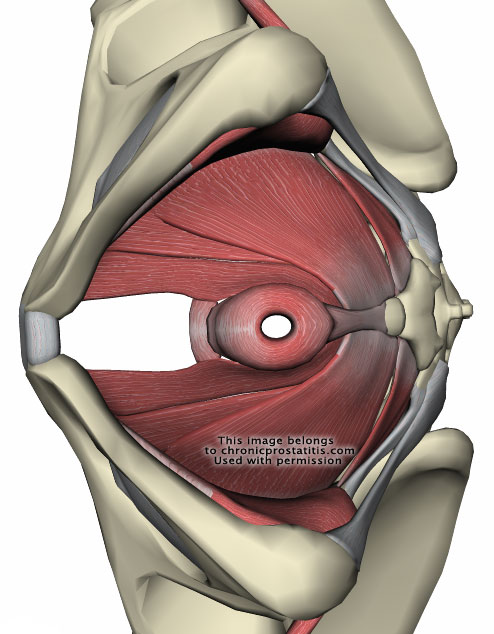
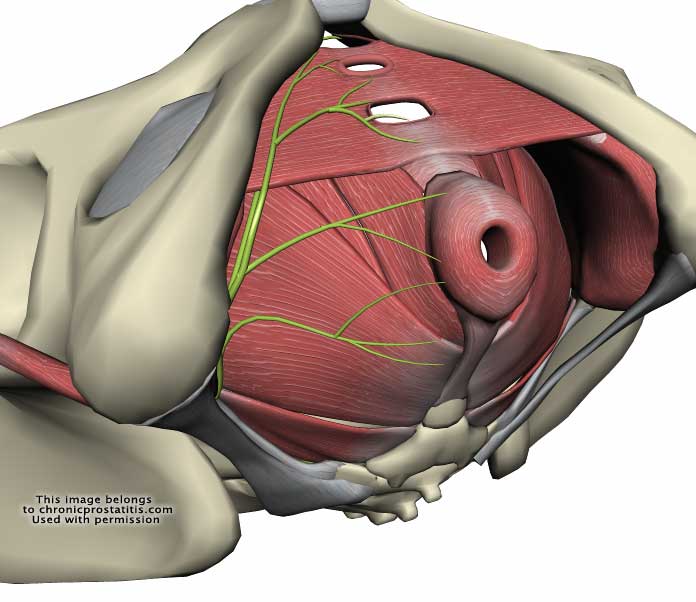
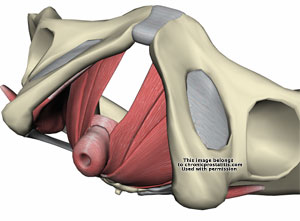
| The main pelvic floor muscles from below. Notice the anal sphincter surrounded by the hammock-shaped levator ani. Image used with permission. |
|
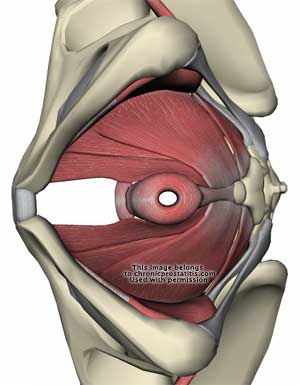
| The large levator ani muscles are divided into several sections, each with different names. The levator ani are bilateral muscles composed of the right and left pubococcygeus muscle anteriorly, and the iliococcygeus in the midpelvis. |
|
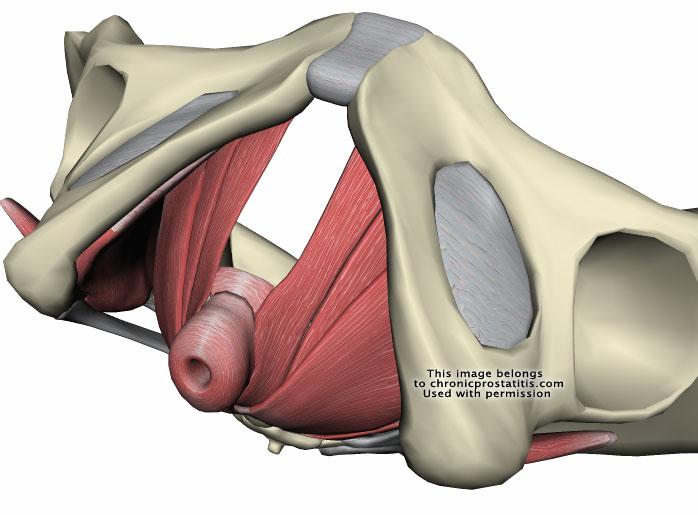
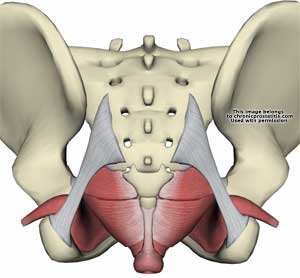
| This nicely illustrates the levator's hammock shape. |
|
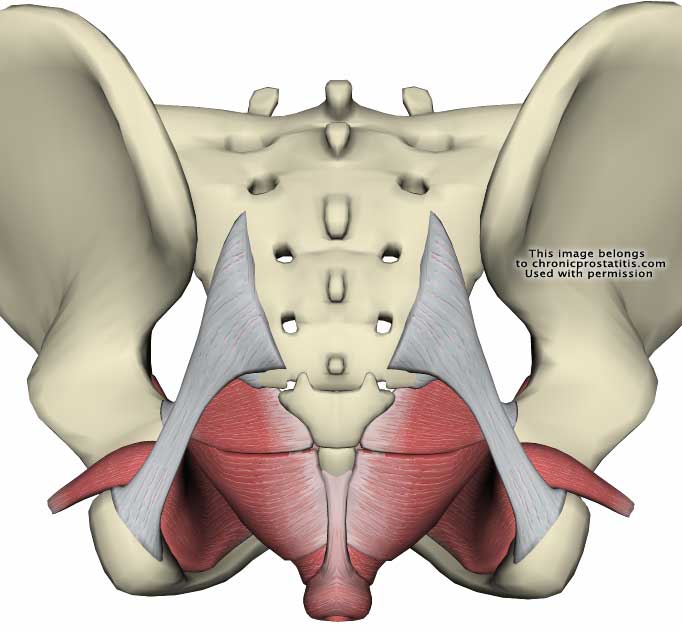
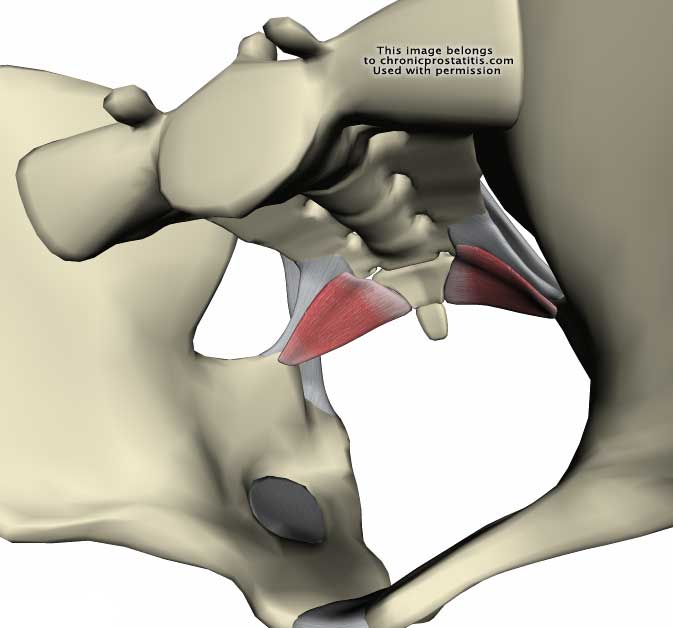
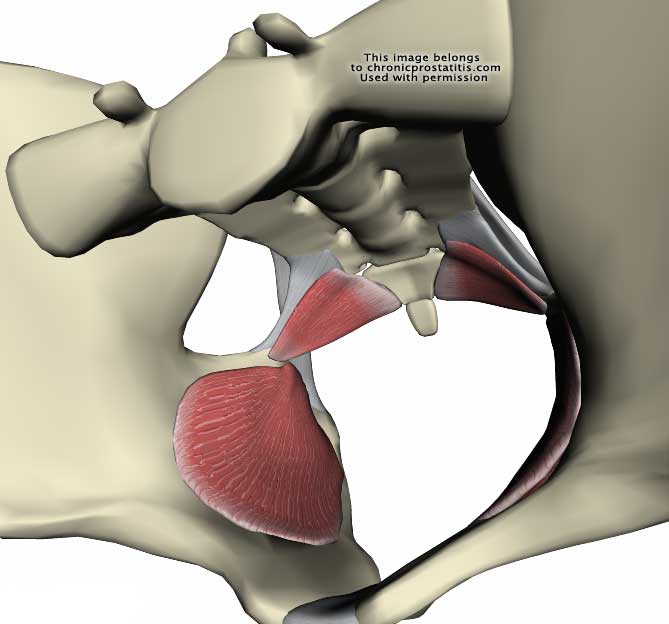
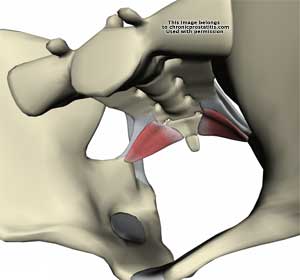
| Behind the levators are the coccygeus muscles. The coccygeus muscle is a thin triangular sheet of muscle continuous with the iliococcygeous muscle anteriorly, originating from ischial spine and sacrospinous ligament, and inserting on the lower sacral margin and coccyx. The coccygeous muscle combines with the levator ani muscle to form the pelvic diaphragm. |
|
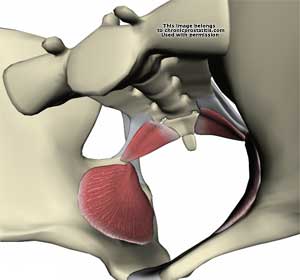
| The obturator internus muscle is a thick, fan-shaped muscle within the pelvis that covers the obturator foramen, attaching around its perimeter, and to the thick obturator membrane. The obturator vessels and nerves lie on the surface of the muscle, exiting the true pelvis via the obturator canal. Sloping downward from antero-superiorly above, the muscle leaves the true pelvis by curving acutely around the ischium, below its spine through the lesser sciatic foramen, to reach the greater trochanter of the femur. |
|
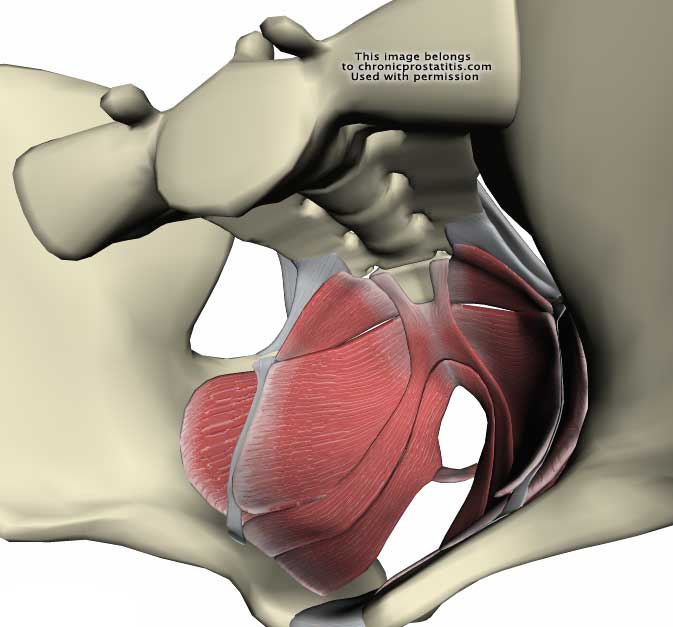
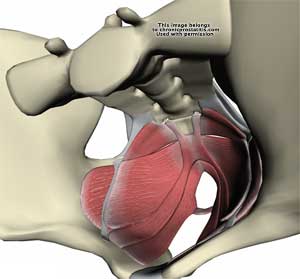
| Here superimposed and attached to the tendinous arches on each side, is the pelvic diaphragm formed by the levator ani muscles. Levator ani muscles actively support the pelvic contents, compressing the urethra by elevating the pelvic floor, and maintaining the anorectal angle by pulling the anorectal junction forward. Relaxation of these muscles allows evacuation of the bladder and rectum. By increasing the intra-abdominal pressure even more through simultaneous contraction of the diaphragm and abdominal wall muscles, they distend the pelvic floor downward, opening its apetures. Image used with permission. |
|
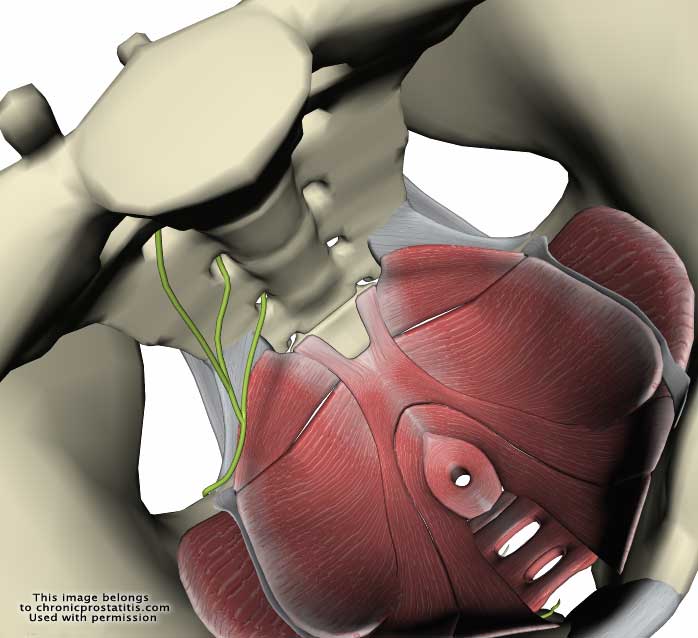
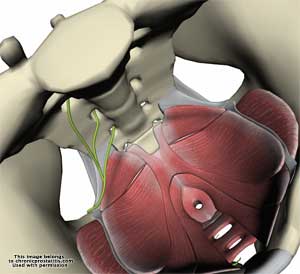
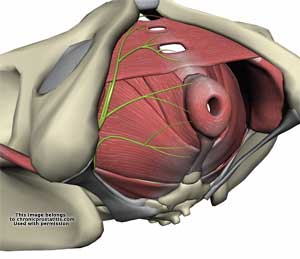
| Notice the route of the pudendal nerve |
|
| The pudendal nerve from below. |
|
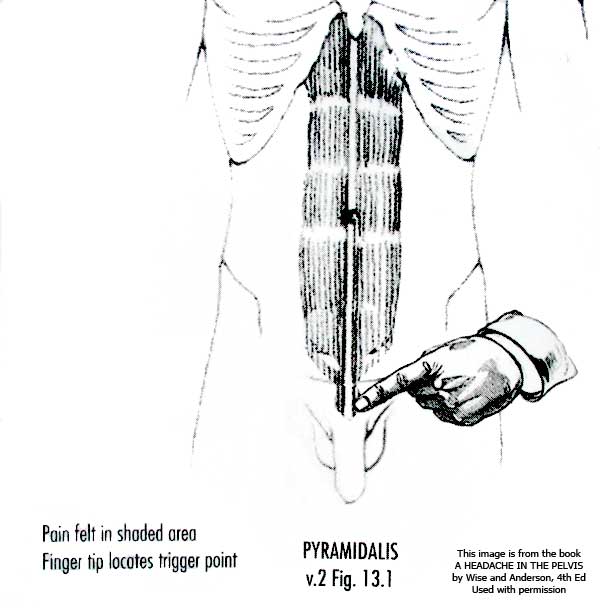
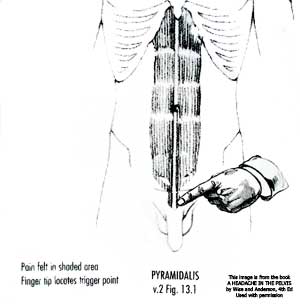
| A diagram from the book by David Wise called "A Headache in the Pelvis". Shows associations of trigger points and pain distribution. |
|
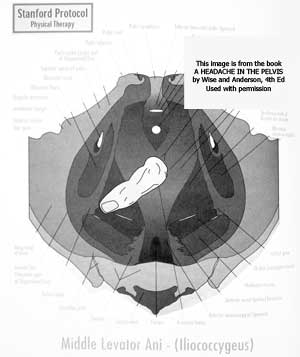
| Another diagram from the book by David Wise called "A Headache in the Pelvis". This shows one of many diagrams from this unique book that demonstrate how internal trigger points associated with male chronic pelvic pain are located and treated. |